A companion site for an upcoming beginner's book that teaches American-style Mahjong: the tiles, the table, the Charleston, scoring, and a full game, built to take a complete beginner from an unopened box to a real table.
American Mahjong is played several genuinely different ways around the world. The fastest way to get confused at an American table is to learn three rule systems at once, from three different sources — a Chinese-rules video, a Riichi app, and a relative's regional variant, all mixed together.
This book teaches one system, all the way through, with nothing borrowed from the others. In the author's own words, from the book's opening pages:
“This book teaches American-style Mahjong rules only. No Chinese, Riichi, or regional-diaspora rules are mixed in.”
Every diagram in the book is also drawn from a single tile set, and every hand shown uses one notation system taught from scratch in Chapter 3 — so a 5-Bams looks like the same 5-Bams on every page it appears, and a hand written on page 40 reads the same way on page 200. The book does not reproduce any specific year's card of standing hands; it teaches the game underneath the card, so what you learn transfers to whatever card your own table plays with.
A complete American Mahjong set holds 152 tiles, sorted into a small number of families. This is the same at-a-glance breakdown the book opens with, before any rules are taught:
| Family | What's in it | Count |
|---|---|---|
| Dots, Bams, Craks | 1–9, four copies each, three suits | 108 |
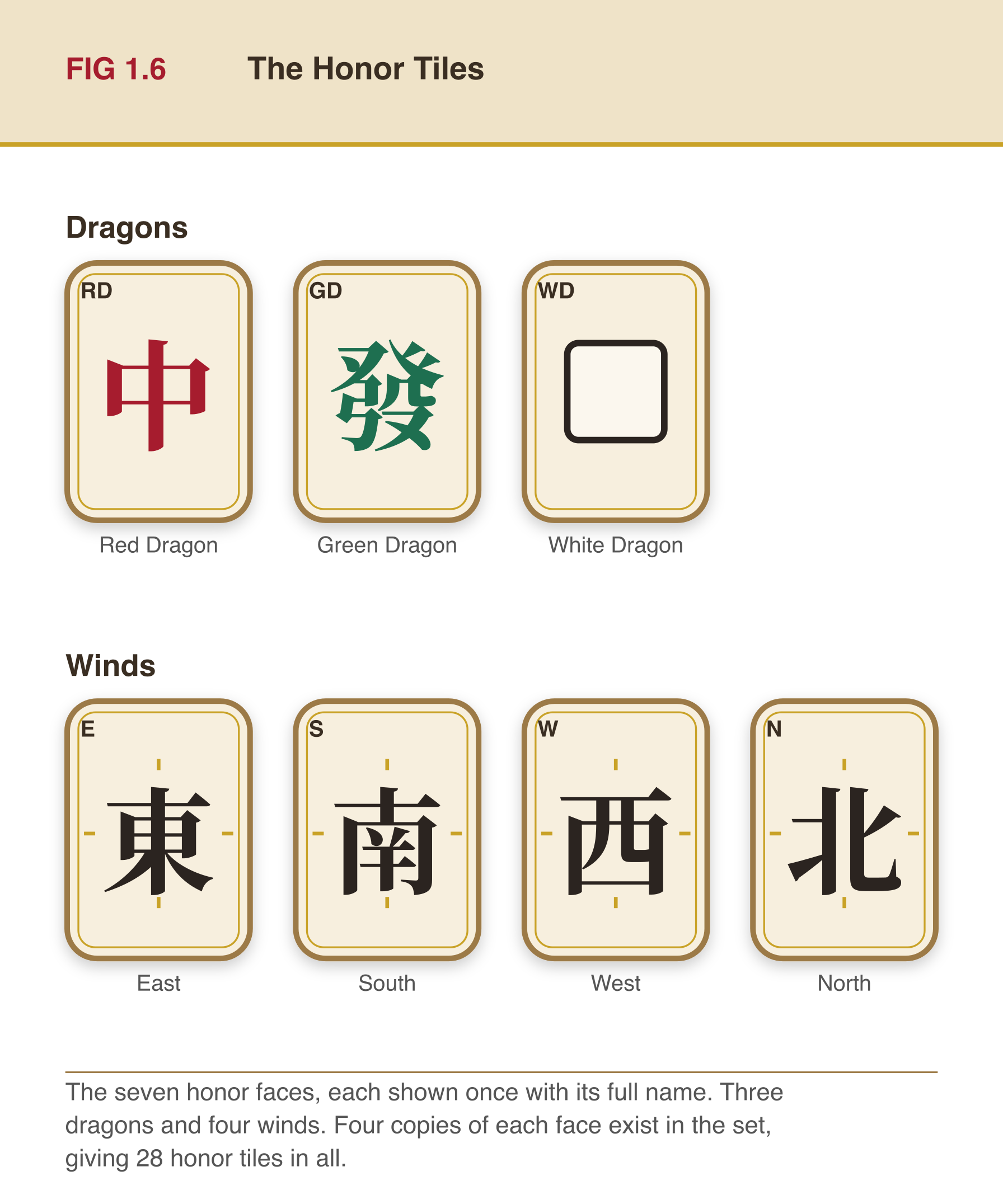
| Dragons | Red, Green, White — four copies each | 12 |
| Winds | East, South, West, North — four copies each | 16 |
| Flowers | eight, each one different | 8 |
| Jokers | eight, all identical | 8 |
| Total | 152 |
A complete hand is four groups and a Pair — fourteen tiles (a Pung, a Kong, or a Run for each group; add one tile to the total for every Kong in the hand).
Fourteen chapters, built to be read in order once and then opened at random forever after. The first eight teach one thing each and hand it to the next; the two game chapters stop and ask what you'd do before telling you what happened.
From the book's own closing pages:
“If a question comes up while you're at the table, or you just want to tell me how your first real game went, write to me directly — I read every message myself.” — Allen S.C. Choi
A dedicated contact address for this site is not live yet. Placeholder, not a working address: [CONTACT EMAIL — coming soon]
Check back here once the book's title and launch date are confirmed.